

Induction Cooktops vs. Electric Cooktops: Which Is Better for Your Kitchen?
/Shopping for a new cooktop?
Usually, shoppers looking to figure out what type of cooktop they want narrow down the options by looking at which one actually performs better in the kitchen.
If you’ve determined that a gas cooktop is not right for you, then it’s time to look at induction cooktops vs. electric cooktops.
The difference comes down to how each cooktop generates heat, which in turn determines how efficiently they cook and how much control you have over the process.
Understanding these differences will help you make the right investment, especially if you're looking for long-term performance and value.
So, What Is an Induction Cooktop?
Induction cooktops use electromagnetic technology to heat cookware directly rather than heating the cooking surface itself.
Beneath the glass cooking surface, copper coils generate a magnetic field that is capable of creating “excited iron molecules.”
"Excited iron molecules" in this context refers to the rapid physical vibration of the iron atoms within a magnetic pot or pan.
When iron-rich cookware, such as cast iron, is placed on the burner (often called an element), the magnetic field forces electrons in the metal to move rapidly back and forth.
The metal resists these swirling currents, which results in friction at the molecular level and creates heat through rapid energy transfer.
This method fundamentally changes how cooking feels. Instead of waiting for a burner to heat up, induction delivers energy directly to your cookware in near-instant time. The result is faster boil times, more precise control, and significantly improved efficiency.
And Then, What Is an Electric Cooktop?
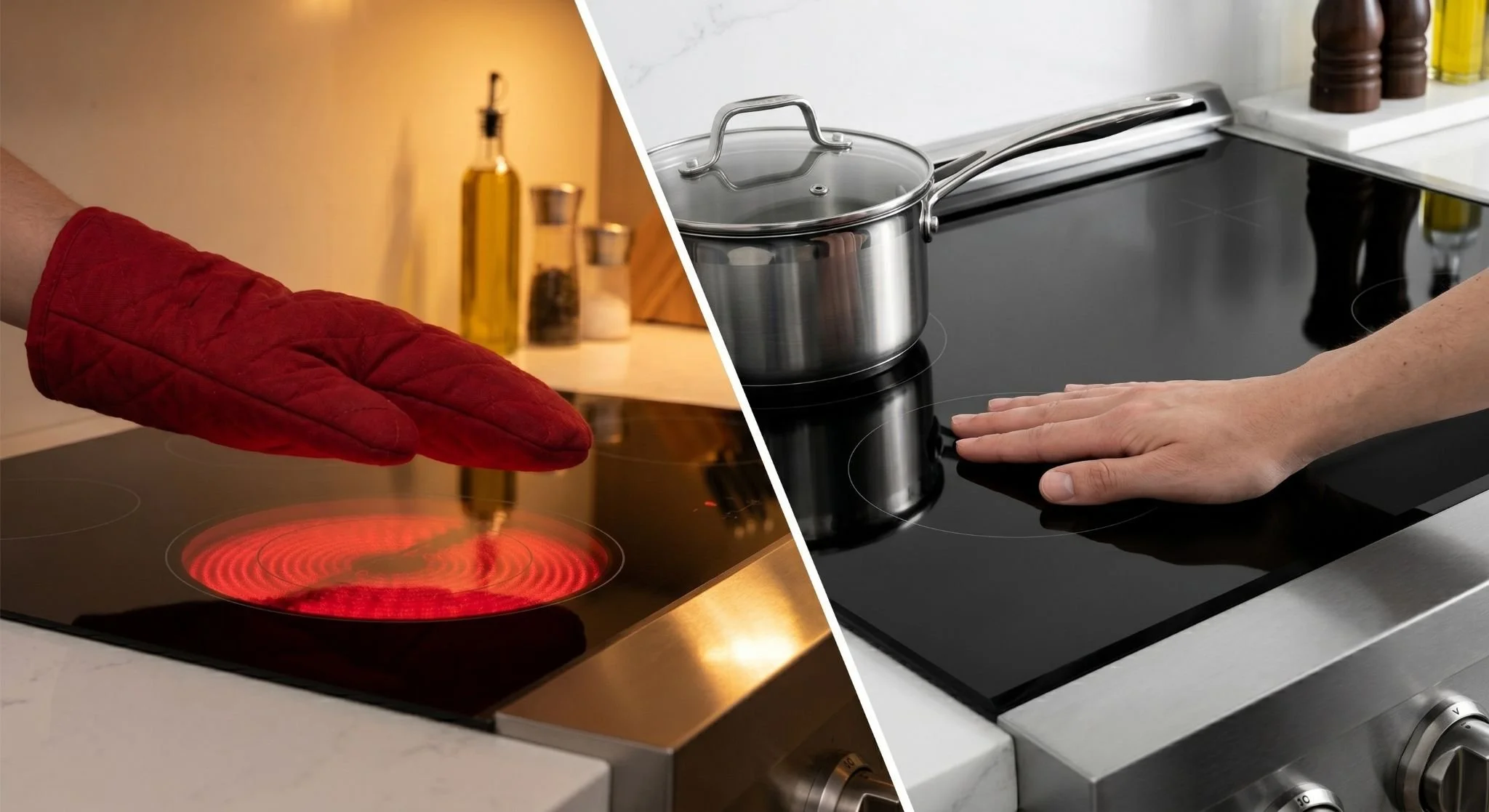
Electric cooktops, often referred to as radiant cooktops, rely on traditional heat transfer. Electricity passes through metal coils, either exposed or located beneath a smooth glass surface, generating heat that transfers upward into the cookware.
While this is a familiar and widely used method, it introduces inefficiencies because the heat must travel through multiple layers before reaching your food, which slows down cooking and reduces responsiveness when adjusting temperatures.
Induction vs. Electric Cooktops: Key Differences
Heating Speed and Performance
Induction cooktops are substantially faster because they heat the cookware directly. Water boils more quickly, pans reach temperature faster, and cooking overall becomes more efficient. Electric cooktops take longer to heat because energy must first warm the burner and glass surface before reaching the pan.
Temperature Control and Precision
Induction offers immediate responsiveness. When you adjust the heat level, the change happens instantly, similar to gas cooking but with greater accuracy.
Electric cooktops lag because the heating element retains heat, causing delayed reactions when increasing or decreasing temperature.
Energy Efficiency
Induction cooktops are significantly more efficient. Since heat is generated directly in the cookware, very little energy is lost.
Electric cooktops lose heat to the surrounding air and through the cooktop surface, making them less efficient overall.
Safety and Surface Temperature
Safety is one of the most overlooked advantages of induction. Because the surface itself is not the primary heat source, it remains much cooler and cools down quickly after use.
Electric cooktops retain heat long after cooking, increasing the risk of burns.
Cookware Compatibility
Induction requires ferromagnetic cookware such as cast iron or certain stainless steel.
Electric cooktops are more flexible and work with nearly all cookware materials, including glass and copper.
Cost Considerations
Electric cooktops typically have a lower upfront cost, making them appealing for budget-conscious shoppers.
Induction cooktops tend to be more expensive initially, but they often deliver better long-term value through efficiency, performance, and durability.

Pros and Cons of Induction Cooktops
Induction cooktops excel in speed, precision, and efficiency. They are ideal for home chefs who want complete control over their cooking and value modern technology. They are also easier to clean, as spills are less likely to burn onto the surface due to lower ambient heat.
The primary drawback is the requirement for compatible cookware and a higher initial investment. However, for many shoppers, these are minor trade-offs compared to the performance benefits.
Pros and Cons of Electric Cooktops
Electric cooktops offer simplicity and familiarity. They are easy to install, work with virtually any cookware, and come at a lower price point. For casual cooks or those upgrading on a budget, they remain a practical option.
That said, they fall short in speed, control, and efficiency. The slower response time and retained heat can make precise cooking more difficult, particularly for techniques that require quick temperature changes.
Which Cooktop Should You Choose?
If your priority is performance, induction is the clear winner. It delivers faster cooking times, superior control, and better energy efficiency.
Induction is especially appealing for modern kitchens where speed, safety, and clean design are top priorities.
Electric cooktops make sense if you want to keep your existing cookware, prefer a more traditional cooking experience, or need to minimize upfront costs.
They are reliable, but they do not offer the same level of performance as induction.
Why ZLINE Induction Cooktops Stand Out
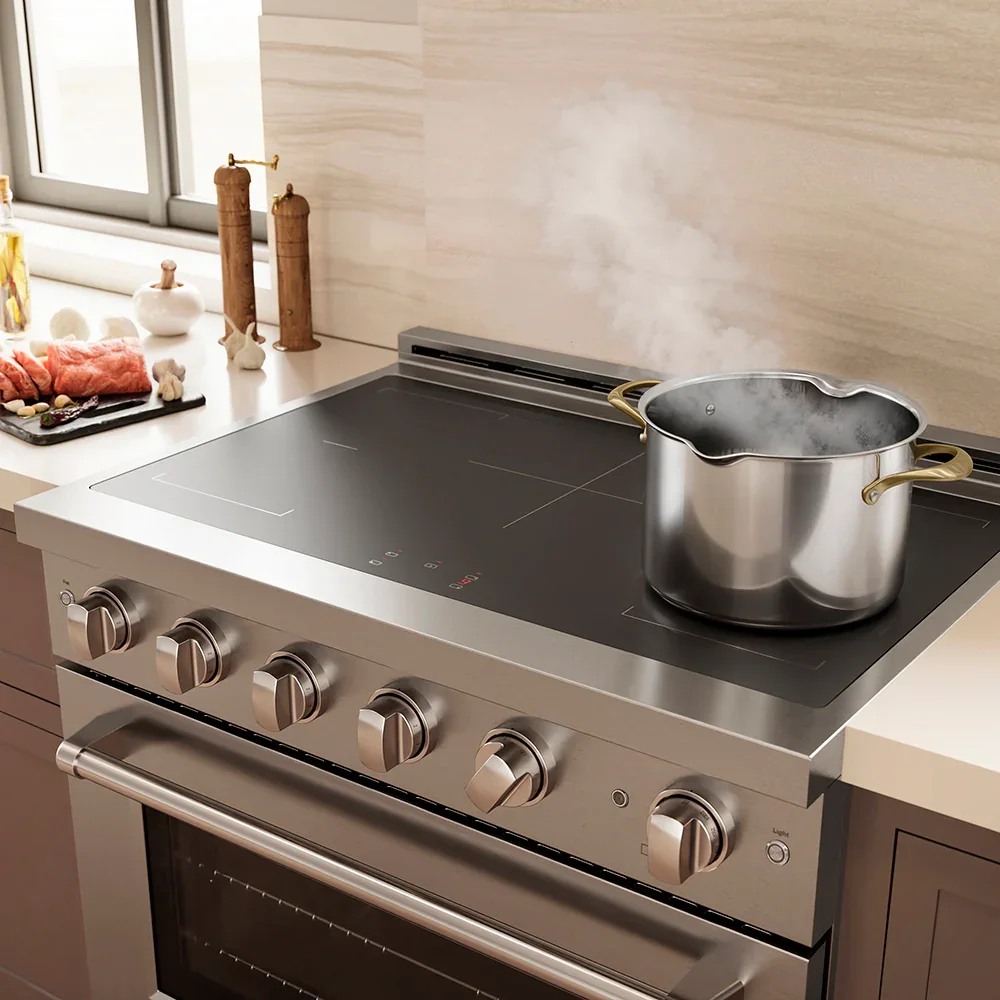
For shoppers ready to invest in induction technology, ZLINE induction cooktops, such as the RCIND-30, and induction ranges, such as the SINR36, represent one of the best options on the market. They offer high-end performance in a premium design that is nearly impossible to find at this price point.
In addition to performance, ZLINE focuses on delivering value. Compared to other premium induction brands, ZLINE’s induction cooking suite provides comparable technology and design at a much more accessible price, making it ideal for those looking for a premium induction cooking experience and results without overspending.
Final Verdict: Induction vs. Electric Cooktops
When evaluating induction cooktops vs. electric cooktops, the gap in performance is clear. Induction leads in speed, precision, efficiency, and safety, making it the superior choice for most modern kitchens.
Electric cooktops still have their place for budget-conscious buyers or those who prioritize compatibility with existing cookware. However, for shoppers looking to upgrade their cooking experience, induction is the future.
Choosing a high-quality option like a ZLINE induction cooktop ensures you not only benefit from this advanced technology but also get the reliability and design needed to make it a long-term investment in your kitchen.

